Choosing the right signage material shapes how your message holds up and what it costs to maintain. For permanent outdoor signage, the conversation usually lands on aluminium composite panels. So what is an aluminium composite panel, and why has it become the standard for construction hoardings, property development boards, and retail fit-outs across Australia?
Aluminium composite panels, often shortened to ACP or ACM, are a flat sheet material made by sandwiching a non-aluminium core between two thin aluminium skins. The result is rigid, lightweight, and weather-resistant, with a smooth surface that prints sharply and holds colour for years outdoors. This guide covers what ACP is made of, why it works as signage, and how it stacks up against Corflute and foam PVC.
What Is an Aluminium Composite Panel?
An aluminium composite panel is a layered sheet made of two thin aluminium skins bonded to a non-metallic core. The skins are typically 0.3mm to 0.5mm thick, with the core making up the bulk of the panel. Standard ACP signage comes in 3mm and 4mm thicknesses.
The core defines how the panel performs. Two main types are used in Australia:
- Polyethylene (PE) core. Lightweight and cost-effective. Suited to interior signage, freestanding outdoor signs, and hoardings not attached to a building façade.
- Fire-retardant (FR) or mineral-filled core. Designed to meet building fire safety requirements. Used where the panel forms part of a façade or sits in an area subject to cladding fire rules.
Following the Lacrosse fire in Melbourne in 2014 and Grenfell Tower in 2017, fire-retardant cores became the default for façade applications. The National Construction Code sets clear requirements for combustible cladding, so the core type matters for any signage sitting on or near a building.
Key Characteristics and Advantages of ACP
- Lightweight but rigid. A 3mm sheet is light enough for two people to install yet stiff enough to span hoarding frames without sagging.
- Weatherproof. The aluminium skin doesn’t rust, and the surface shrugs off rain. Quality ACP runs for 5 to 10 years outdoors in Australian conditions, depending on print process and exposure.
- Sharp print finish. ACP takes UV-cured digital print and vinyl wrapping cleanly. Colours stay vibrant, and edges stay crisp.
- Easy to fabricate. Cut, routed, folded, and drilled on-site with standard tools.
- Recyclable. Both the aluminium skins and the core can be recycled at the end of life.
- Meets building standards. FR-core ACP can be specified to meet National Construction Code requirements for combustible cladding.
The trade-off is upfront cost. ACP isn’t the cheapest signage material, and for short-term jobs, lighter options often make more sense.
Types of Rigid Signage Materials
Australian sign shops typically work with these rigid signage materials:
- Aluminium composite panel (ACP / ACM). The premium permanent option. Best for outdoor signage that needs to last 5+ years.
- Corflute. A fluted polypropylene sheet, like cardboard but plastic. Very light, cheap, and waterproof, but flexible and prone to denting. Default for real estate boards, election signs, and short-term construction signage. Outdoor life is typically 6 to 18 months.
- Foam PVC (expanded PVC). A rigid foamed plastic sheet, sometimes sold as Foamex or Sintra. Sits between Corflute and ACP on cost and durability. Good for indoor signage, retail displays, and short- to medium-term outdoor use.
- Metal sheet. Solid aluminium or galvanised steel. The heaviest and most durable rigid option, used for traffic signs, statutory signage, and where strength outweighs cost.
Most signage briefs come down to a three-way decision between ACP, Corflute, and foam PVC.
ACP vs Corflute vs PVC: Side-by-Side Comparison
| Feature | ACP / ACM | Corflute | Foam PVC |
| Construction | Aluminium skins + polymer core | Fluted polypropylene | Expanded PVC foam |
| Typical thickness | 3mm to 4mm | 3mm to 5mm | 3mm to 10mm |
| Outdoor lifespan | 5 to 10 years | 6 to 18 months | 2 to 5 years |
| Weight | Light to medium | Very light | Light |
| Rigidity | High | Low (flexible) | Medium |
| Weather resistance | Excellent | Good | Fair to good |
| Print quality | Excellent | Good | Excellent |
| Recyclable | Yes | Yes | Limited |
| Relative cost | $$$ | $ | $$ |
| Best for | Permanent outdoor signage, façades, hoardings | Short-term signs, real estate, events | Indoor signs, retail, medium-term outdoor |
When to choose ACP: Long-term construction hoardings, property development signage, permanent retail fit-out signage, building façades, and any outdoor sign that needs to look sharp for years.
When to choose Corflute: Real estate boards, election signs, event wayfinding, and short-term construction signs.
When to choose foam PVC: Indoor retail signage, point-of-sale displays, shop windows, and medium-term outdoor use.
Best Signage Materials for Construction Sites
Construction sites are tough on signage. Open lots face wind exposure, dust and concrete splatter, occasional knocks from machinery, and project timelines stretching from months to years.
For short-term works under 12 months, Corflute hoarding panels can do the job at the lowest cost. They’re easy to swap if damaged and quick to install on chain-mesh fencing. The downside is that wind gusts bend or dislodge them, and the print finish loses sharpness after a winter or two.
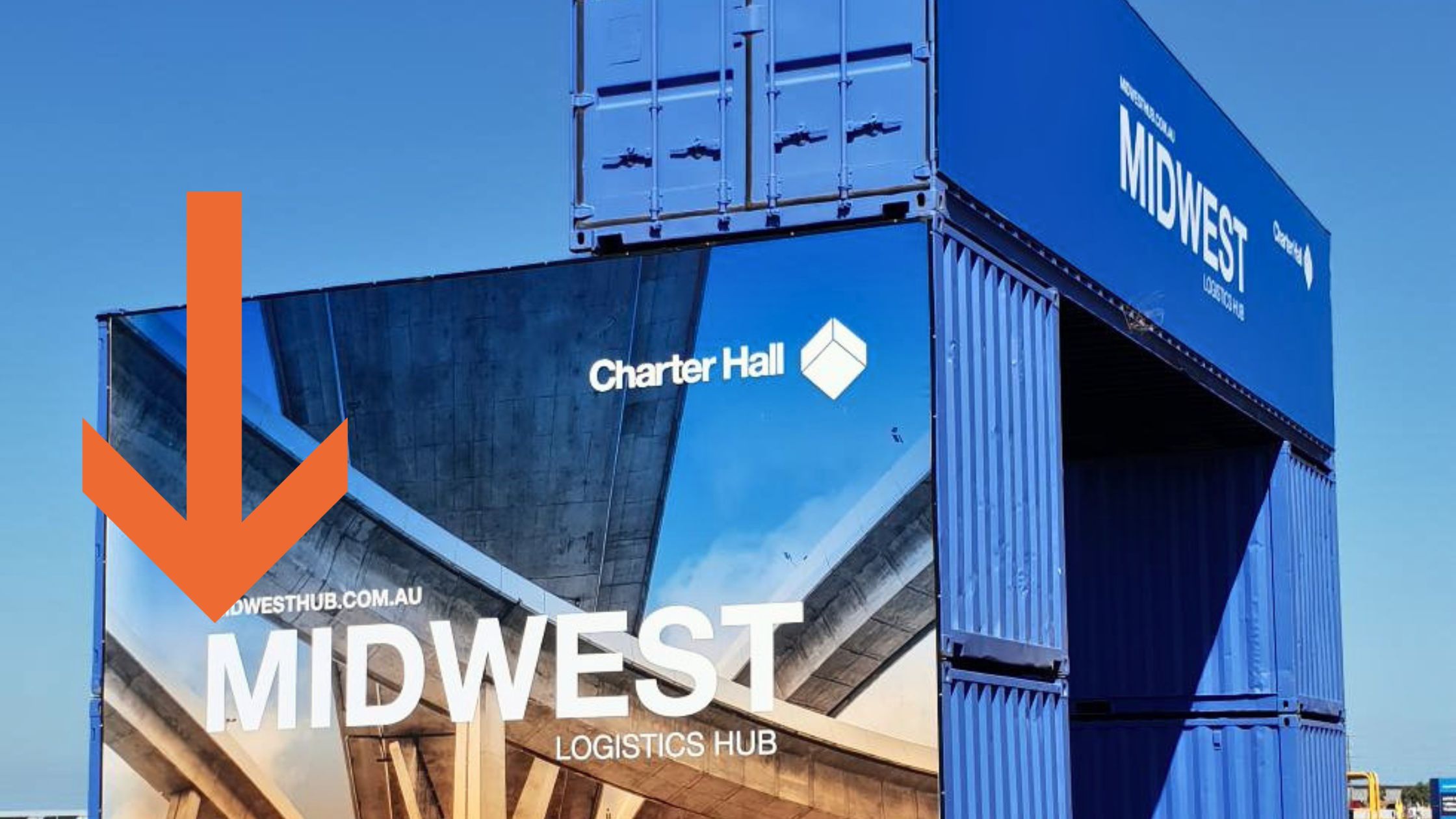
For longer projects, ACM signage is the standard. A 3mm or 4mm panel holds shape through high winds, stays clean with a quick wipe-down, and keeps developer branding sharp for the life of the build. Most multi-storey developments and infrastructure projects in Australia specify ACP for site hoardings.
A few practical considerations:
- Wind loading. ACP’s rigidity handles gusty conditions far better than Corflute, especially on tall hoarding panels.
- Brand presentation. Developers increasingly treat hoardings as a marketing surface, and ACP’s print quality supports that.
- Council requirements. Some councils require fire-retardant signage in specific zones. Check before specifying.
- Replacement cost. Cheaper materials cost more over a long project if they need replacing twice.
For a permanent or long-running site, aluminium composite panel signage is almost always the right call.
What is an aluminium composite panel used for?
Outside of signage, ACP shows up across construction and fit-out work:
- Building façades and cladding. The most common architectural use.
- Interior wall panels. Fit-outs, lift lobbies, and feature walls.
- Shopfronts. Both interior detailing and external fascias.
- Fencing. Modern aluminium fence panels often use ACP for the infill.
- Transport and equipment. Signage trailers, vehicle wraps, and equipment cladding.
For most Mesh Direct customers, the application is signage: site hoardings, property development boards, retail fit-out panels, and outdoor signs where image matters and the sign needs to last.
Frequently Asked Questions
How long does an aluminium composite panel sign last outdoors?
Quality ACP signage typically lasts 5 to 10 years outdoors in Australian conditions before showing noticeable wear. The aluminium skin won’t rust, and UV-cured prints hold colour well. Lifespan depends on the print method, mounting, and exposure. Direct full-sun coastal installations often sit at the lower end of that range, while sheltered or inland signs run longer.
What’s the difference between ACP and ACM?
Nothing meaningful. ACP (aluminium composite panel) and ACM (aluminium composite material) refer to the same product. ACP is the more common term in Australian signage; ACM is used more often in construction and cladding contexts. Some manufacturers prefer one over the other, but you can treat them as interchangeable when specifying signage.
Is an aluminium composite panel fire safe?
It depends on the core. Standard polyethylene-core ACP is combustible and is restricted from façade use under the National Construction Code following reforms after the Lacrosse and Grenfell fires. Fire-retardant or mineral-core ACP is designed to meet building fire safety requirements for façade applications. For signage away from buildings, PE-core is generally acceptable. Always check local requirements before installation.
Can aluminium composite panels be printed on directly?
Yes. ACP takes UV-cured digital print, screen print, and adhesive vinyl wrapping cleanly. The smooth aluminium surface gives sharp colour reproduction and crisp edges, which is why ACP is favoured for branded signage. For best results, primer or specialised inks are used depending on the print process and substrate finish.
How thick should ACP signage be?
For most signage jobs, 3mm ACP is the standard. It’s rigid enough for hoardings, fascias, and large-format outdoor signs, and light enough to handle and install easily. 4mm is used for larger panels, areas with higher wind exposure, or where extra rigidity is needed. Thinner sheets (2mm) are available but less common for signage applications.
Choosing the Right Signage Material for Your Project
The answer to “what is an aluminium composite panel” should now be clear. It’s a layered sheet of aluminium and polymer that gives you rigid, weatherproof, sharp-printing signage built to last.
Corflute still has its place for short-term jobs. Foam PVC sits in the middle for indoor and medium-term applications. For construction hoardings, property development boards, retail fit-outs, and any outdoor sign that needs to look sharp for years, ACP is the material to specify.
A few checks before you order: confirm the panel core matches your application (PE for general signage, FR for façades), match thickness to size and wind exposure, check whether your project needs fire-retardant compliance, and ask about the print method and any warranty on colour fastness.
Mesh Direct supplies aluminium composite panel signage to construction sites, property developments, and retail fit-outs across Sydney, Melbourne, and Brisbane. Get a quote, and we’ll match the right product to your job.